
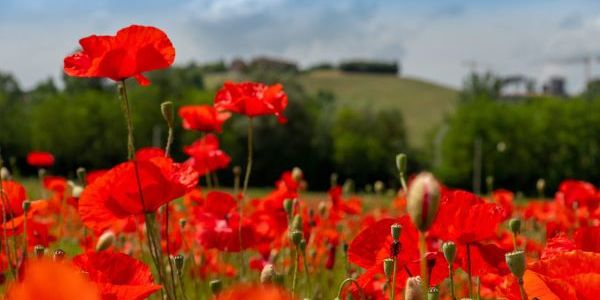
It will be Remembrance Day soon. Both my grandfathers were veterans of that so-called Great War. The war to end all wars. And my father and his cousin of the next. My social media feeds are awash with images of poppies and small children saluting – of beautiful choral arrangements of I Vow to Thee, my Country and We will remember them. And yes, I find it humbling. And I am moved. But I am also profoundly sad. So much has been written lately, particularly about the first World War, and it is clear that not only did so many die who need not have died but so many suffered who should not have had to suffer.
They called it shell shock and so many men would be shot because they couldn’t face the noise, the violence, the death, any more. They were sent into battle, forced to take a stain on their souls that would never wash away. This is the thing about war that horrifies me most. That we send kind, honourable, loving people into situations where they must commit the sin of murder. We call it defense, we call them casualties, we call it peacekeeping or police action or protection. I am grateful beyond belief to those people who continue to do what they are told is needful. And I am angry beyond belief with those who make it necessary.
Because it isn’t only the military men and women who suffer. It isn’t just (just?) the people they have killed and the families that have been torn apart by death. The destruction within seldom stays within and seldom erupts without causing caustic burns to anyone it touches.
I believe my father suffered from PTSD all his life. No amount of womanising or of drinking could salve the wounds to his soul. And we all suffered. Everyone who loved him suffered.
About ten years or so ago, I was seeing a counsellor for depression, something I’d done off and on since I was about thirty. I told her about my Annus Horribilis – the year in which my mum had broken her hip, my dad had had cancer, I’d had mono and then been in a life-threatening accident, and my dad had left us. All that in less than twelve months. I hadn’t really put it all together before then. And I told the story with a laugh for how absurd it seemed – a kind of you-can’t-make-this-stuff-up line. The counsellor said to me, “It sounds like you have PTSD.” I dismissed it. Veterans have PTSD. First Responders. Heroes. I was none of those things.
I’ve come to realise over the years that, yes, I do suffer from PTSD. Some days I can tell you I’m over it. Two days later, I’ll be curled into a ball in the corner of the bathroom, sobbing into a towel, door locked. So, you know, I try just to focus on this day, this moment. Try, being the important word.
Here’s the thing, though. There’s a friend on facebook who’s been posting things about PTSD – things like the fawn response, and about extreme independence. And I realised that these things were aspects of my personality before my accident – or any of the events of that Annus Horribilis. And I have been slowly coming to the conclusion that what I (and likely all my siblings) have suffered from all our lives is a kind of second-generation PTSD. The carry on effects of my Father’s war and the ways it tainted all his relationships – with our mother, with our siblings, tainted our mother’s relationships with us.
It will be Remembrance Day soon. And I will weep at the sound of the Last Post and the bagpipes. And I will weep for my grandfathers, dying of their wounds many years after the war, and for my father, whom I never really knew. And I will weep for my brother and sisters and myself. For all sufferers of PTSD, however it has laid its mark on you. But most of all, I will weep for humanity that we cannot find a way to resolve things without war, whatever it’s called. And I weep for the future and wonder – how many more, O Lord, before remembrance will take hold and change the world.
Dulce et decorum est pro patria vivere.

 Elizabeth Knighton Brown